About this app
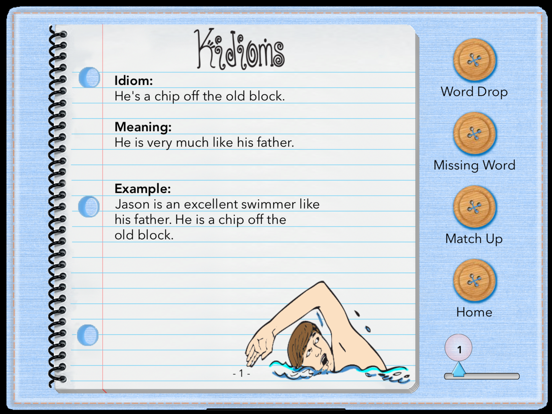
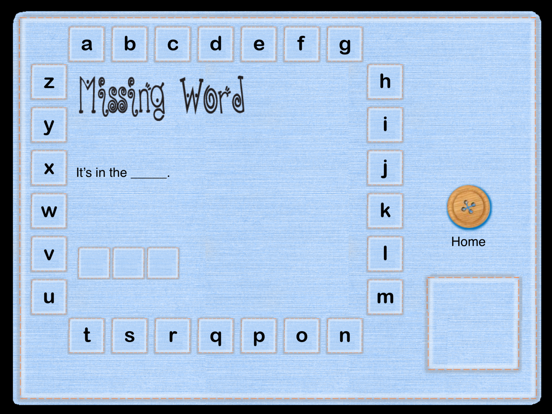
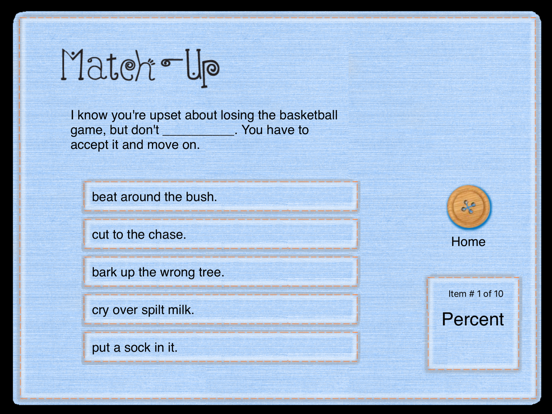
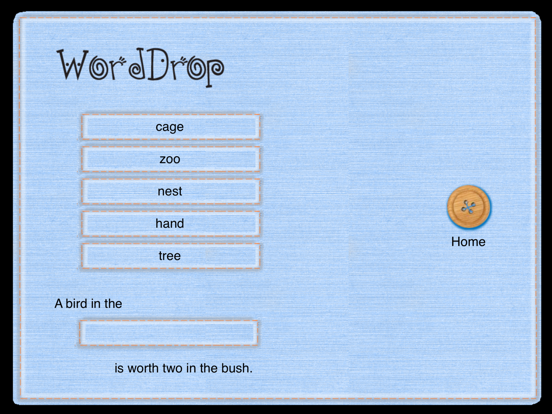
Kidioms – An Introduction to Idioms for Kids The Kidioms iPad app makes learning idioms fun for children, ELL students, or anyone wishing to improve their understanding of English. The app uses an interactive notebook to present an idiom, it's meaning and an example showing the idiom used in context. Each page of the notebook also has a graphic to help illustrate the idiom’s meaning. In addition to the lessons, Kidioms offers three interactive activities to help reinforce the concepts and provide practice using and understanding the idioms. Word Drop challenges the learner to complete the idiom by choosing the correct missing word. Missing Word asks the user to spell the missing word. In Match-Up the player selects the correct idiom to fill in the blank in a larger block of text. Common Core Standard that are address by Kidioms: Vocabulary Acquisition and Use Grade 3 •L.3.5. Demonstrate understanding of figurative language, word relationships and nuances in word meanings. ◦Distinguish the literal and non-literal meanings of words and phrases in context (e.g.,take steps). ◦Identify real-life connections between words and their use (e.g., describe people who are friendly or helpful). ◦Distinguish shades of meaning among related words that describe states of mind or degrees of certainty (e.g., knew, believed, suspected, heard, wondered). Grade 4 •L.4.5. Demonstrate understanding of figurative language, word relationships, and nuances in word meanings. ◦Explain the meaning of simple similes and metaphors (e.g., as pretty as a picture) in context. ◦Recognize and explain the meaning of common idioms, adages, and proverbs. Demonstrate understanding of words by relating them to their opposites (antonyms) and to words with similar but not identical meanings (synonyms). Grade 5 L.5.5. Demonstrate understanding of figurative language, word relationships, and nuances in word meanings. •Interpret figurative language, including similes and metaphors, in context. •Recognize and explain the meaning of common idioms, adages, and proverbs. Use the relationship between particular words (e.g., synonyms, antonyms, homographs) to better understand each of the words.
Latest release
What’s New
This version provides an update to recommended settings and new graphic features.
Audience growth
Ratings growth
Baseline captured. Growth appears after the crawler observes a changed rating count.
Momentum comes from crawler snapshots for the tracked storefront. “Viral growth signal” means unusually fast recent rating gains; it is an indicator, not download data.
Price tracking
Price intelligence
First snapshot captured. The trend line starts after the next crawler price observation.
- First observed Aug 22, 2026 · 6:12 PM $1.99
Screenshots