About this app
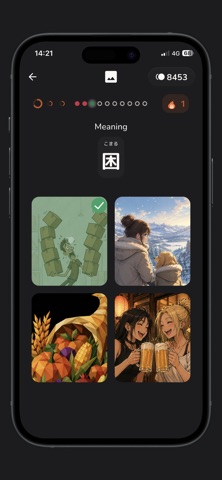
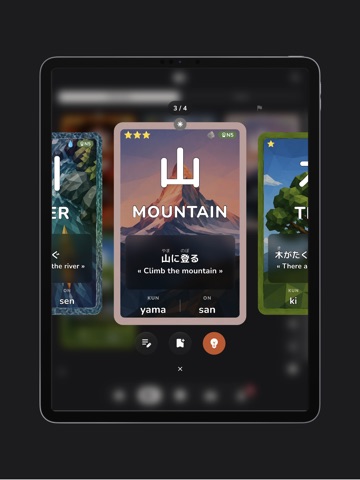
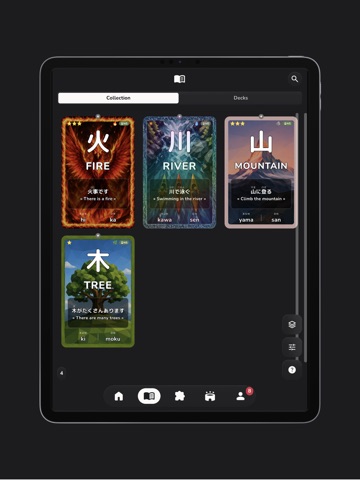
The usual flashcards called. They say they’re still stuck in 2018. Kanjidon started with one simple question: what if the problem wasn’t how you study kanji… but the very idea that you have to study them? We took the JLPT kanji, from N5 to N1, and changed the rules. Open a pack, complete a mission, climb the leagues. The rest stops feeling like studying. Other apps want to teach you Japanese. We want you to forget you’re studying it. That’s the only promise we care about keeping. More than 33,000 downloads later, we still think studying is overrated. Because when curiosity replaces obligation, something strange happens: you open Kanjidon for five minutes… and stay for a lot longer. Learning Japanese is the side effect. Kanjidon't Stop. AND NOW FOR THE BORING PART. THE PART THE OTHER APPS HOPED YOU WOULDN’T READ. • More than 6,000 kanji and vocabulary cards for every JLPT level (From N5 to N1, including the part where the kanji stop cooperating altogether.) • A complete Japanese grammar course with 395 lessons (Not a taster, not a summary, not “Google the rest”: the whole course, from the basics to advanced grammar.) • 270 reading passages to listen to, understand and translate (Not embalmed sentences built to squeeze in three new words: illustrated stories with Japanese and international characters in situations you could actually find yourself in.) • 16 quiz types, including handwriting, dictation and shadowing (You don’t just stare at a kanji: you hear it, recognize it, write it and say it, until it stops being a hostile symbol and becomes something you know.) • Spaced repetition for meanings and readings (Kanjidon decides what you need to review and when to bring it back: ideally, one moment before your brain manages to bury it.) • Full JLPT mock exams from N5 to N1, with realistic structure and timing (No tourist mode: the clock starts, the exam begins and the excuses stay outside.)
Latest release
What’s New
Another month, another glow-up. We squashed some bugs and polished a few things behind the scenes.
Audience growth
Ratings growth
Baseline captured. Growth appears after the crawler observes a changed rating count.
Momentum comes from crawler snapshots for the tracked storefront. “Viral growth signal” means unusually fast recent rating gains; it is an indicator, not download data.
Price tracking
Price intelligence
First snapshot captured. The trend line starts after the next crawler price observation.
- First observed Sep 6, 2026 · 12:26 PM Free
Screenshots