About this app
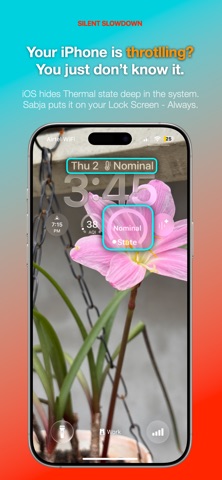
Your iPhone already knows when it is under too much thermal pressure. iOS just never tells you. Sabja is a lightweight iPhone heat and performance monitor for spotting overheating signs early and choosing a simple cooldown step. Sabja surfaces Apple's built-in Thermal State, the same signal iOS uses to quietly throttle your CPU, dim your screen and slow your camera. Current Thermal State monitoring in the Home tab is free. Sabja Pro is required for saved History and widgets. USE HOME FOR FREE See your current Thermal State at a glance: Nominal, Fair, Serious or Critical, with guidance you can act on right away. GET ALERTED THE MOMENT IT CHANGES Instant push notifications when your state rises or eases, plus a daily summary so you always know how your day went. No more guessing why your phone felt warm in your pocket. KNOW WHY, NOT JUST WHEN Smart Suggestion analyzes what was happening when your phone warmed up: Wi-Fi, charging, Low Power Mode, and gives you one clear next step to help it cool down faster. SABJA PRO: HISTORY AND WIDGETS Sabja Pro unlocks saved History, trend charts, time spent in each state, Top Reasons, and widgets. Lock Screen widgets can keep monitoring Thermal State when Sabja is not open and notify you when the state rises or eases. BUILT FOR APPLE SILICON Sabja reads directly from iOS's native ProcessInfo thermal API: no background tricks, no battery drain from constant polling. Just an honest, real-time read of what your system is already tracking. Terms of Use: https://www.apple.com/legal/internet-services/itunes/dev/stdeula/ Privacy Policy: https://pawargb.github.io/thermal_privacy_policy/
Audience growth
Ratings growth
Baseline captured. Growth appears after the crawler observes a changed rating count.
Momentum comes from crawler snapshots for the tracked storefront. “Viral growth signal” means unusually fast recent rating gains; it is an indicator, not download data.
Price tracking
Price intelligence
First snapshot captured. The trend line starts after the next crawler price observation.
- First observed Aug 21, 2026 · 8:17 AM Free
Screenshots