About this app
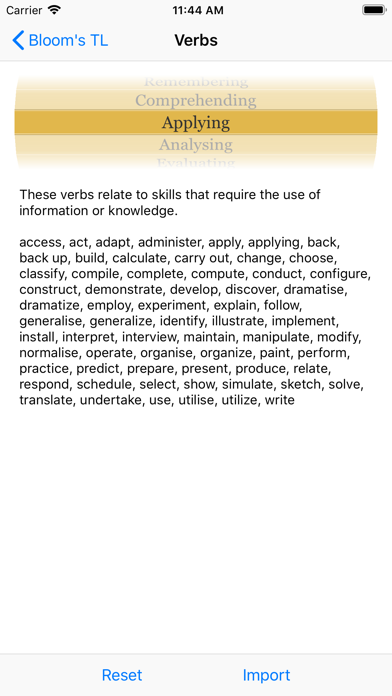
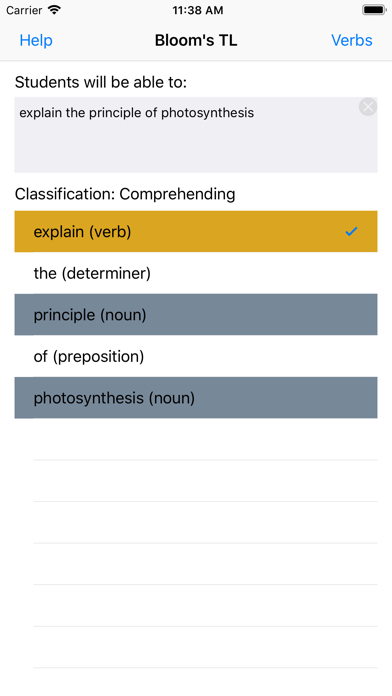
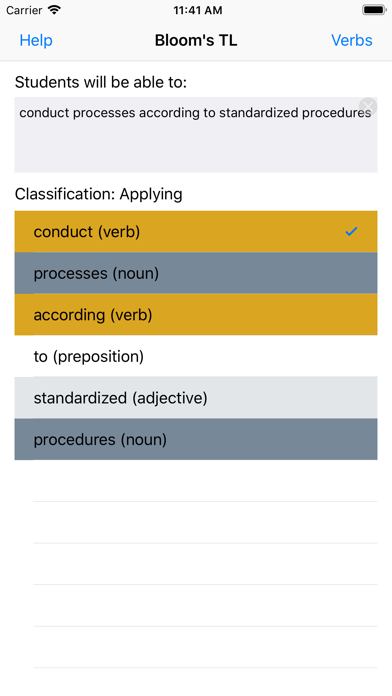
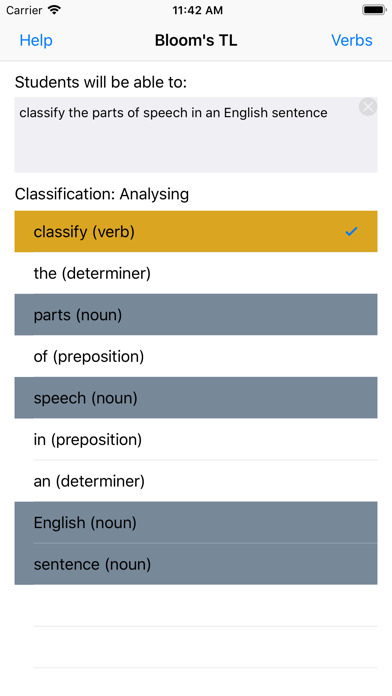
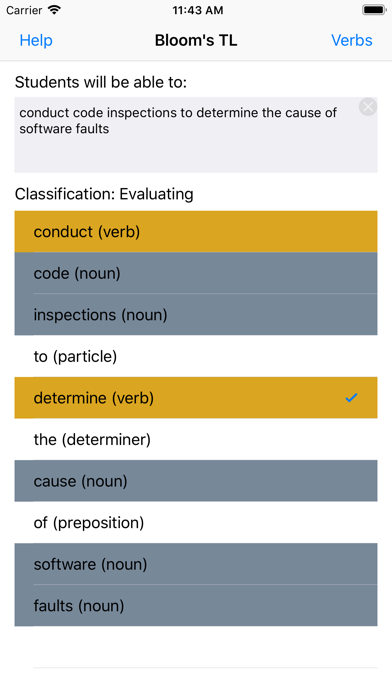
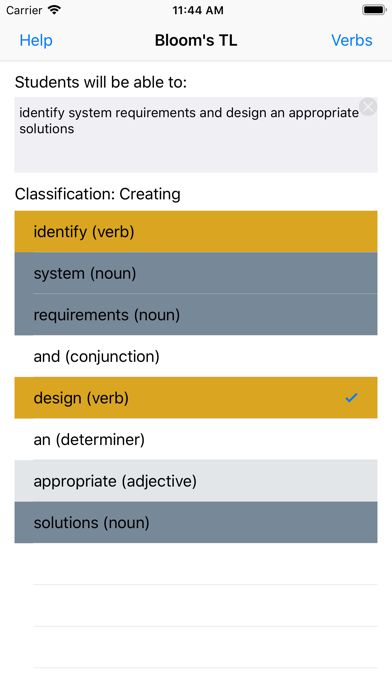
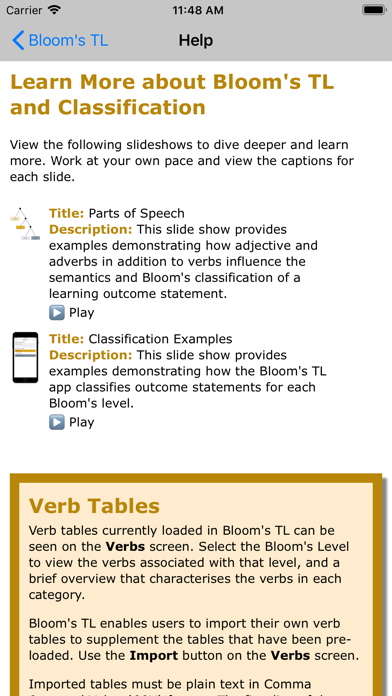
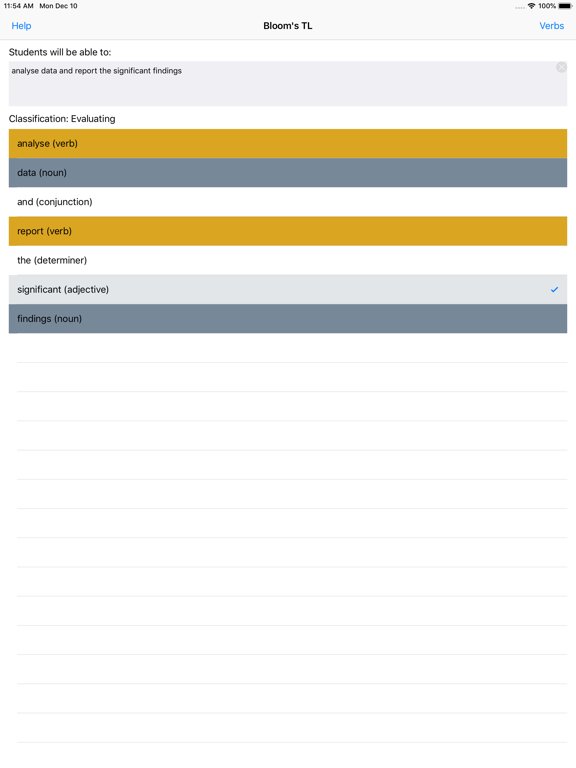
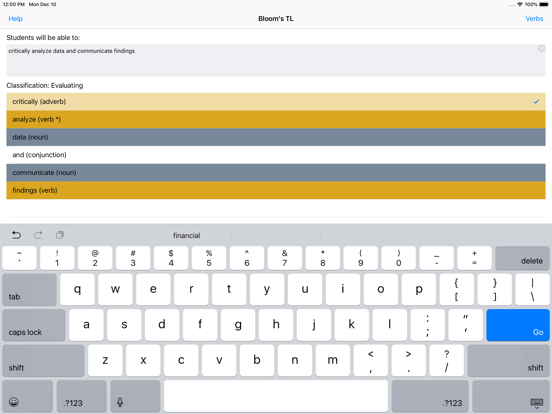
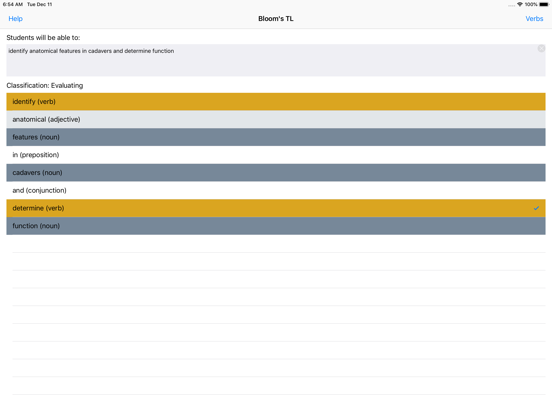
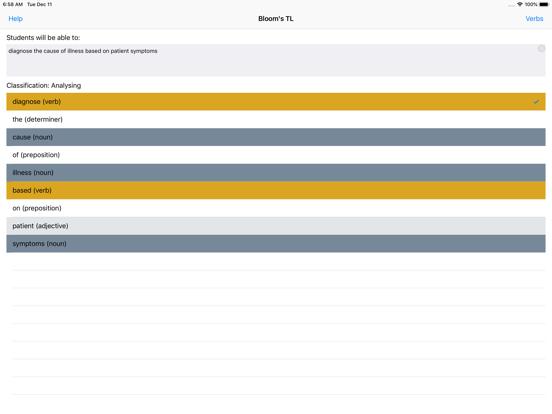
Blooms TL classifies learning outcome statements based on Bloom's Taxonomy (Anderson and Krathwhol, 2001). This taxonomy describes the depth of thinking required by students in learning activities and assessments. The six levels in Bloom's taxonomy are: remembering, comprehending, applying, analysing, evaluating, and creating. The classification in this app uses tables containing parts of speech that are generally classified at a given Bloom's level. These tables have been previously been identified in the education literature (Stanny, 2016; von Konsky et al. 2018). Classification examples can be found at http://bvonkonsky.com/bloomstl/slideshow2.html Anderson, L. W., & Krathwohl, D. R. (2001). A taxonomy for learning, teaching, and assessing: A revision of Bloom's taxonomy of educational objectives. Stanny, C. J. (2016). Reevaluating Bloom’s Taxonomy: What measurable verbs can and cannot say about student learning. Education Science, 6(37), 12. von Konsky, B.R., Zheng, L., Parkin, E., Huband, S. & Gibson, D. (2018). Parts of speech in Bloom’s Taxonomy Classification. In M. Campbell, J. Willems, C. Adachi, D. Blake, I. Doherty, S. Krishnan, S. Macfarlane, L. Ngo, M. O’Donnell, S. Palmer, L. Riddell, I. Story, H. Suri & J. Tai (Eds.), Open Oceans: Learning without borders. Proceedings ASCILITE 2018 Geelong (pp. 527-532).
Audience growth
Ratings growth
Baseline captured. Growth appears after the crawler observes a changed rating count.
Momentum comes from crawler snapshots for the tracked storefront. “Viral growth signal” means unusually fast recent rating gains; it is an indicator, not download data.
Price tracking
Price intelligence
First snapshot captured. The trend line starts after the next crawler price observation.
- First observed Sep 1, 2026 · 2:44 PM Free
Screenshots