About this app
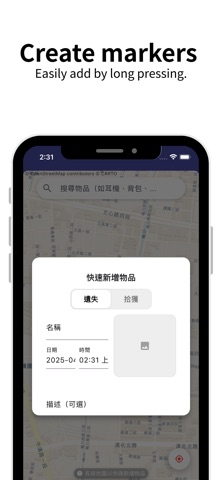
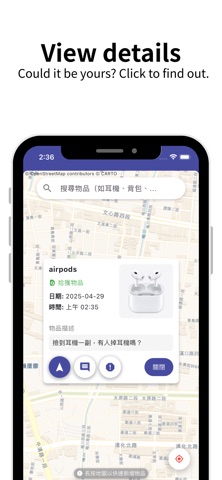
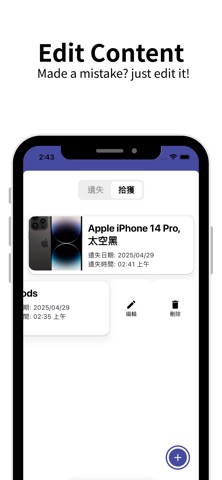
Lost Map – A Smarter Way to Reclaim Lost Items Lost Map is an innovative lost-and-found app designed to help users quickly recover lost belongings through community collaboration and a map-based interface. Whether you’ve lost something or found an item, the process is fast and intuitive: users can upload descriptions, locations, and photos of lost or found items, which are then displayed on a map to help connect owners with finders. Unlike traditional methods—such as bulletin boards, social media posts, or police reports—Lost Map focuses on speed, simplicity, and visual clarity. By marking a lost item directly on the map in just three steps, users can share or locate items more efficiently than ever before. The app is ideal for both everyday situations and special cases: commuters or students who lose wallets or IDs, travelers looking for misplaced luggage or souvenirs, or neighbors sharing found items within their communities. The visualized map view enhances spatial awareness, helping users see where items are located at a glance, boosting both confidence and recovery rates. Traditional lost-and-found methods suffer from scattered information, slow updates, and lack of real-time communication. Lost Map solves these problems by centralizing user-uploaded data and integrating it with map technology—making the recovery process simpler, faster, and more collaborative. While the app currently focuses on core functionality, future updates aim to expand its features for an even smoother lost-and-found experience.
Latest release
What’s New
• Support for system language display • Fixed issue where the user’s blue location dot did not appear after the tutorial
Audience growth
Ratings growth
Baseline captured. Growth appears after the crawler observes a changed rating count.
Momentum comes from crawler snapshots for the tracked storefront. “Viral growth signal” means unusually fast recent rating gains; it is an indicator, not download data.
Price tracking
Price intelligence
First snapshot captured. The trend line starts after the next crawler price observation.
- First observed Aug 20, 2026 · 2:53 AM Free
Screenshots